
The research presented through the ARUA Centre of Excellence (CoE) for Identities Seminar and Roundtable Series forms part of the Centre’s broader commitment to advancing innovative, interdisciplinary, and African-centred scholarship on questions of identity, belonging, memory, culture, and social transformation. The seminars provide a platform for emerging and established scholars from across Africa and beyond to share cutting-edge research, foster intellectual exchange, and strengthen collaborative networks that address some of the continent’s most pressing social, political, and cultural challenges.
The ARUA CoE for Identities is one of the Centres of Excellence established under the African Research Universities Alliance (ARUA) to strengthen research capacity and knowledge production across the continent. Through its seminar series, the Centre promotes critical engagement with contemporary issues affecting African societies while supporting the development of the next generation of African scholars and researchers.
The research presented in these seminars and discussions was supported by the African Research Universities Alliance (ARUA) through generous funding from the Mastercard Foundation and the Carnegie Corporation of New York. This support contributes to strengthening Africa’s research ecosystem by facilitating scholarly collaboration, promoting intellectual leadership, and generating knowledge that informs policy, practice, and social transformation across the continent.
ARUA CoE Identities Seminar Examines Trauma, Gender, and Identity in Post-Conflict African Literature
19 December 2025
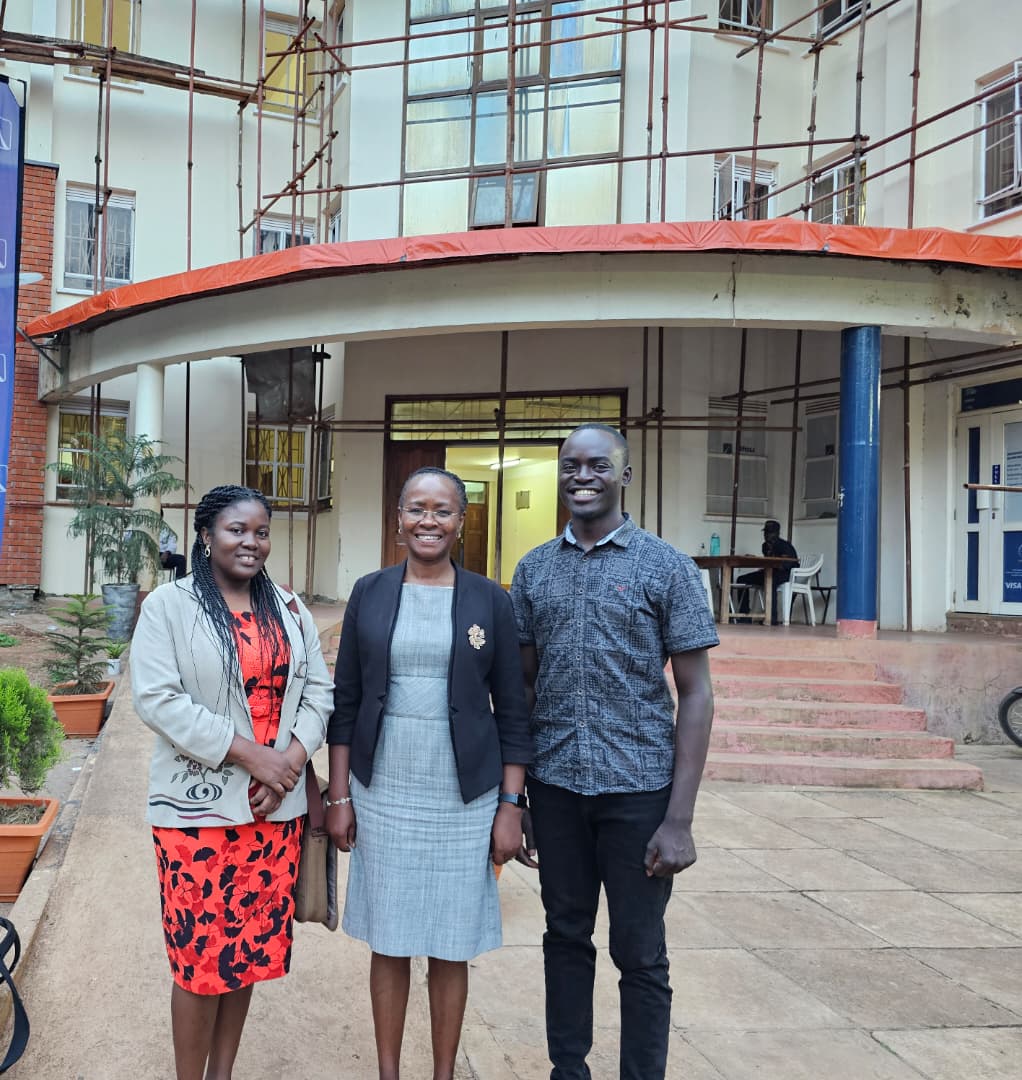 From left to right: Dr. Kehinde Kemi Rebecca of Anchor University, Lagos, Nigeria; Professor Sarah Ssali, First Deputy Vice Chancellor (Academic Affairs) at Makerere University and Centre Director; and Mr. Kiggundu Muhammed, Centre Administrator.
The African Research Universities Alliance (ARUA) Centre of Excellence (CoE) in Notions of Identities in Africa hosted a thought-provoking research seminar on 19 December 2025, featuring a presentation by Dr. Kehinde Kemi Rebecca of Anchor University, Lagos, Nigeria. The seminar brought together scholars and researchers interested in questions of identity, memory, gender, and post-conflict experiences in Africa.
Dr. Rebecca presented a paper titled “Postcolonial Trauma and the Female Body: Rewriting Women’s Subjectivities and Identity in Post-Conflict African Literature.” The presentation explored how African women writers reconstruct narratives of trauma and resilience through literary representations of women’s experiences in societies emerging from conflict.
Drawing on Yvonne Vera’s The Stone Virgins and Chimamanda Ngozi Adichie’s Half of a Yellow Sun, the study examined the ways in which female bodies are portrayed as sites of violence, memory, resistance, and survival. The research challenged traditional interpretations that reduce women to passive victims of conflict, arguing instead that African women writers reimagine women as active agents who negotiate, resist, and reconstruct their identities in the aftermath of violence.
A central theme of the presentation was the critique of dominant Western approaches to trauma studies. Dr. Rebecca emphasized the need for culturally grounded frameworks that account for African social realities, historical experiences, and gendered forms of suffering and recovery. Through the lens of postcolonial feminism and trauma studies, the paper demonstrated how women’s embodied experiences become powerful sources of testimony, resilience, and agency.
The seminar highlighted the significance of literary scholarship in understanding the long-term social and psychological impacts of conflict. Participants engaged in rich discussions on how literature preserves memory, confronts patriarchal structures, and contributes to broader conversations on identity formation and social transformation in post-conflict African societies.
Serving as discussant for the seminar was Dr. Isaac Tibasiima from the Department of Literature, Makerere University, who provided critical reflections on the paper’s theoretical contributions and its relevance to contemporary debates in African literary studies, gender studies, and postcolonial scholarship. His remarks further enriched the discussion by highlighting the importance of centering African perspectives in analyses of trauma, memory, and identity.
The seminar forms part of the ARUA CoE Identities Seminar Series, which provides a platform for scholars across Africa and beyond to share innovative research on identity-related issues. Through such engagements, the Centre continues to foster interdisciplinary scholarship, intellectual exchange, and collaborative research aimed at addressing critical social, cultural, and historical questions affecting African societies.
The research presented was supported by the African Research Universities Alliance (ARUA), with funding from the Mastercard Foundation and the Carnegie Corporation of New York.
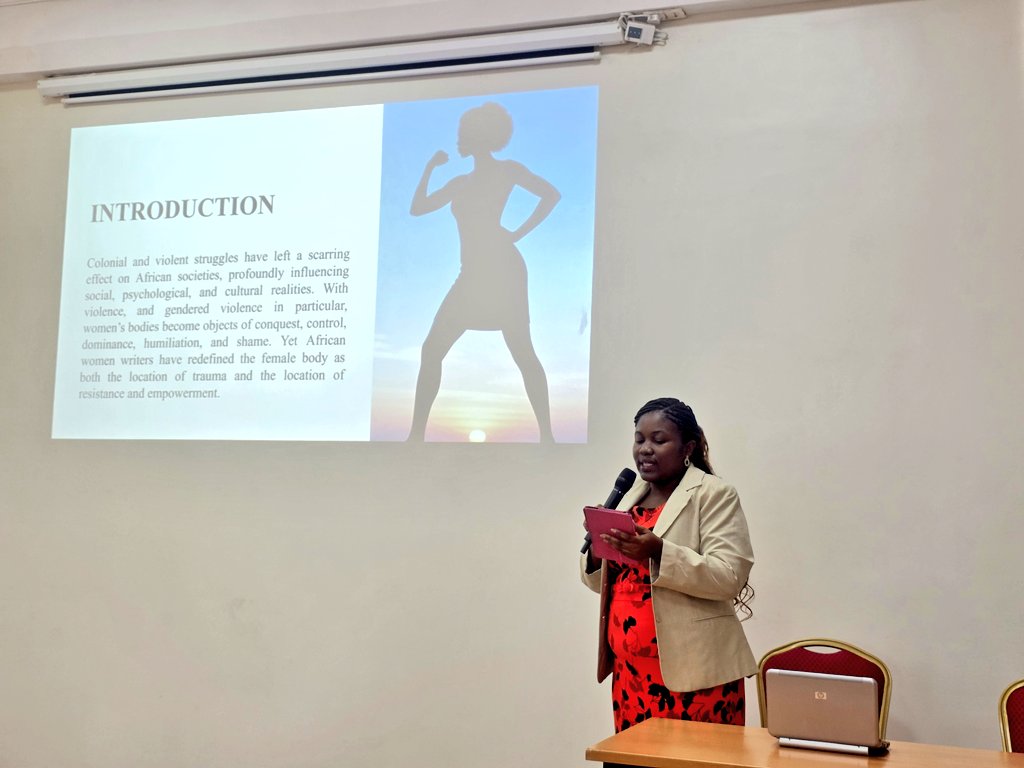
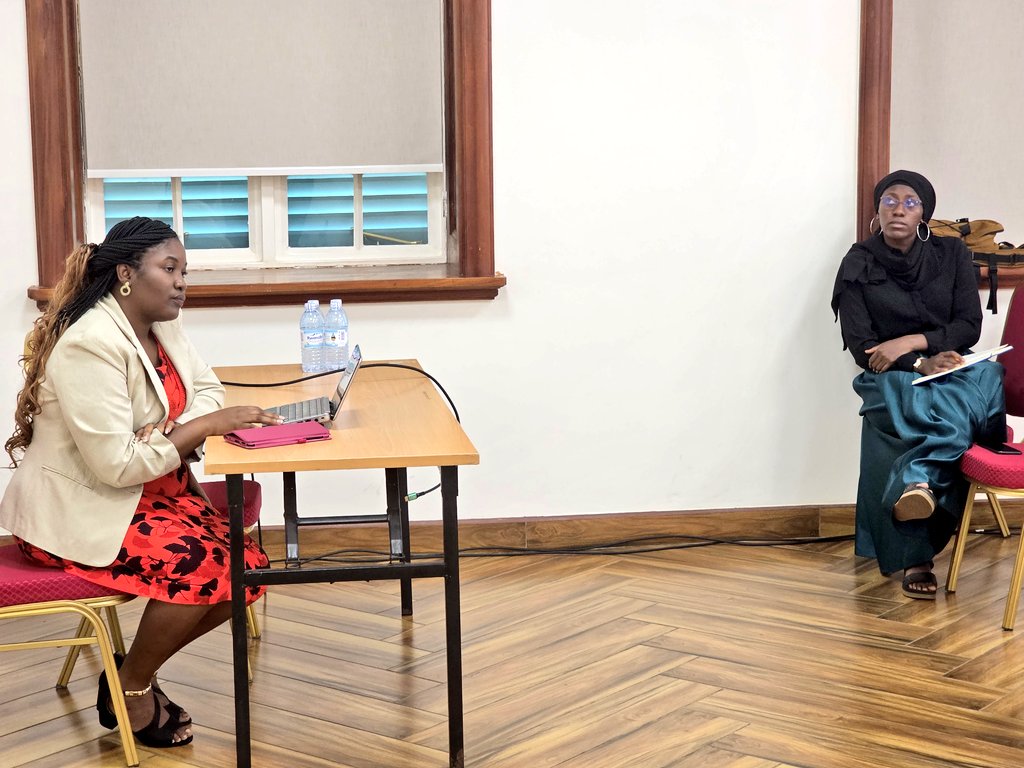
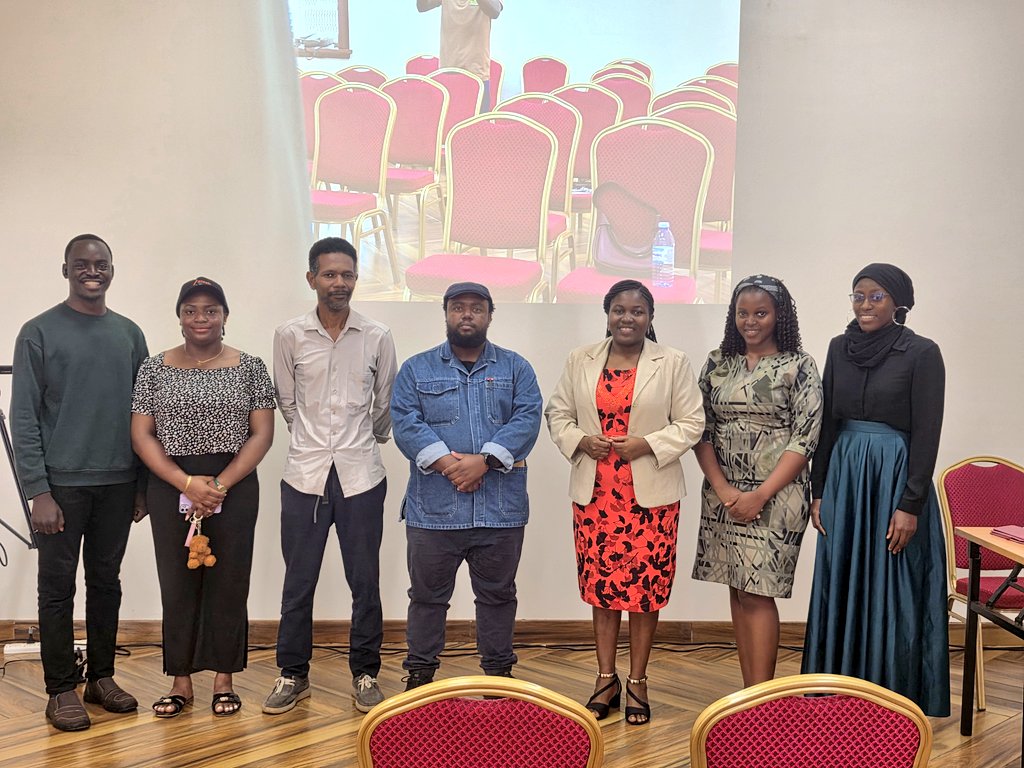
Dr. Kehinde Kemi Rebecca of Anchor University, Lagos, presenting her seminar, “Postcolonial Trauma and the Female Body: Rewriting Women’s Subjectivities and Identity in Post-Conflict African Literature,” during the ARUA CoE Identities Seminar Series held on 19 December 2025. The session was discussed by Dr. Isaac Tibasiima of the Department of Literature, Makerere University.
ARUA CoE Identities Seminar Explores Rebellion and Resistance in African Feminist Fiction
19 February 2026
The African Research Universities Alliance (ARUA) Centre of Excellence (CoE) in Notions of Identities in Africa continued its vibrant seminar series on 19 February 2026 with an insightful presentation by Dr. Kehinde Kemi Rebecca of Anchor University, Lagos, Nigeria. The seminar brought together scholars, researchers, and postgraduate students to engage with contemporary debates on gender, power, identity, and resistance in African literature.
In her presentation titled “The Layers of Rebellion: Dismantling Power Structures in African Fiction,” Dr. Rebecca examined how African women writers employ rebellion as a literary and political strategy to challenge patriarchal structures and gender inequalities. The study focused on three influential African texts: So Long a Letter by Mariama Bâ, Changes: A Love Story by Ama Ata Aidoo, and The Secret Lives of Baba Segi’s Wives by Lola Shoneyin.
Drawing on the theoretical frameworks of nego-feminism and intersectionality, the presentation explored how women’s resistance is shaped by complex social realities, including gender, class, sexuality, fertility, education, and cultural expectations. The study argued that rebellion in African feminist fiction is rarely a singular act of confrontation. Instead, it emerges through diverse forms of resistance, including negotiation, strategic silence, self-preservation, and everyday acts of defiance within patriarchal systems.
The seminar highlighted how characters such as Aissatou and Ramatoulaye in So Long a Letter, Esi in Changes: A Love Story, and the women of The Secret Lives of Baba Segi’s Wives navigate oppressive structures while asserting varying degrees of agency and autonomy. Through these narratives, African women writers reveal both the possibilities and limitations of challenging entrenched systems of power.
A key contribution of the presentation was its emphasis on the layered nature of women’s resistance. Rather than portraying rebellion as a straightforward path to liberation, the study demonstrated how women often negotiate their survival within structures that simultaneously constrain and enable their agency. This nuanced understanding of resistance enriches contemporary discussions on African feminism, identity formation, and social transformation.
The seminar discussion was led by Dr. Isaac Tibasiima of the Department of Literature, Makerere University, who served as the discussant. Dr. Tibasiima commended the paper for its theoretical depth and its contribution to ongoing conversations on African feminist thought and literary studies. His reflections sparked a lively exchange among participants on the intersections of gender, culture, power, and resistance in African societies.
The event forms part of the ARUA CoE Identities Seminar Series, which seeks to foster interdisciplinary scholarship and critical dialogue on issues of identity, belonging, memory, culture, and social transformation across Africa. By providing a platform for innovative research and intellectual exchange, the Centre continues to strengthen scholarly networks and advance knowledge production on issues that shape contemporary African experiences.
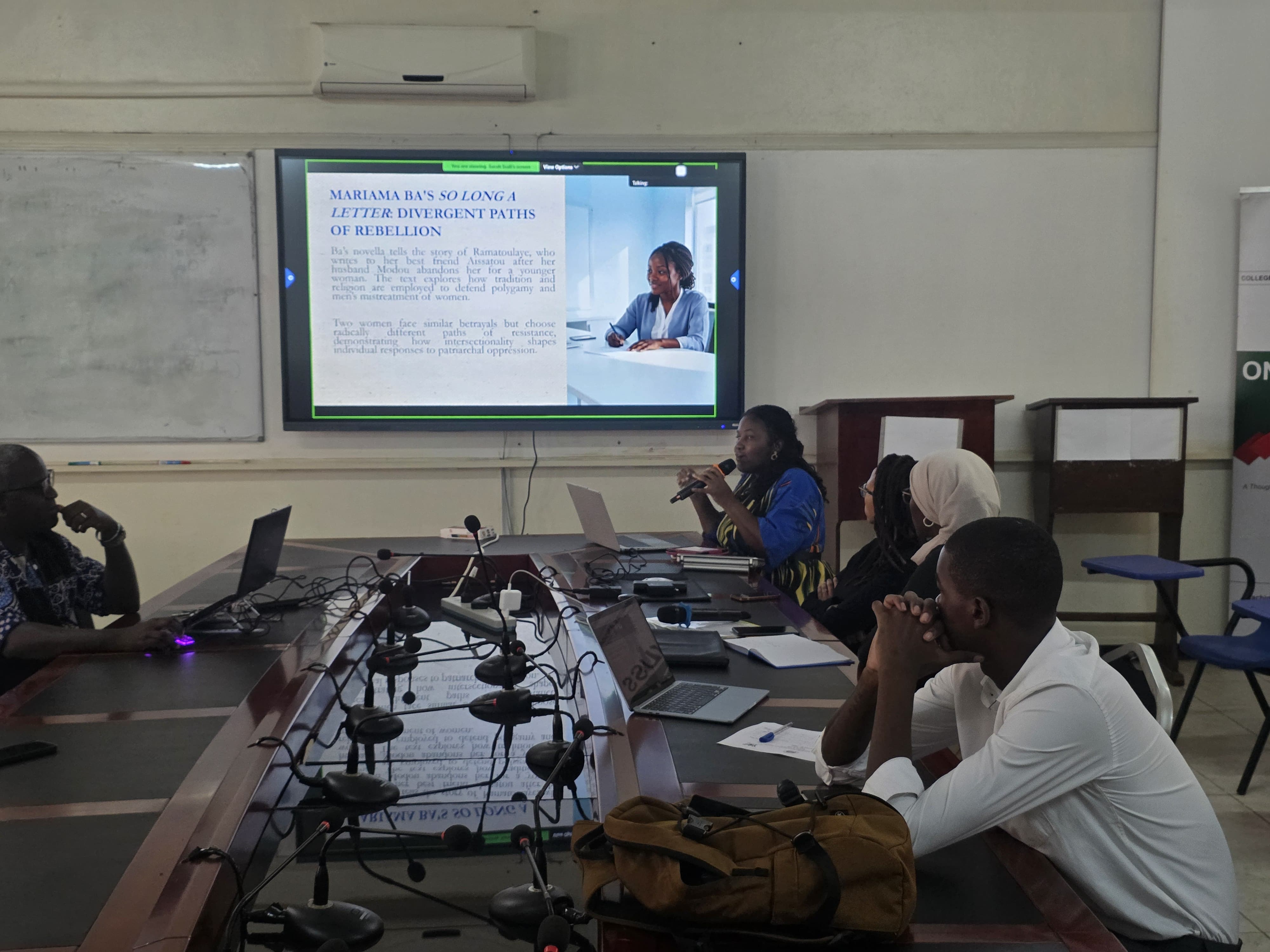
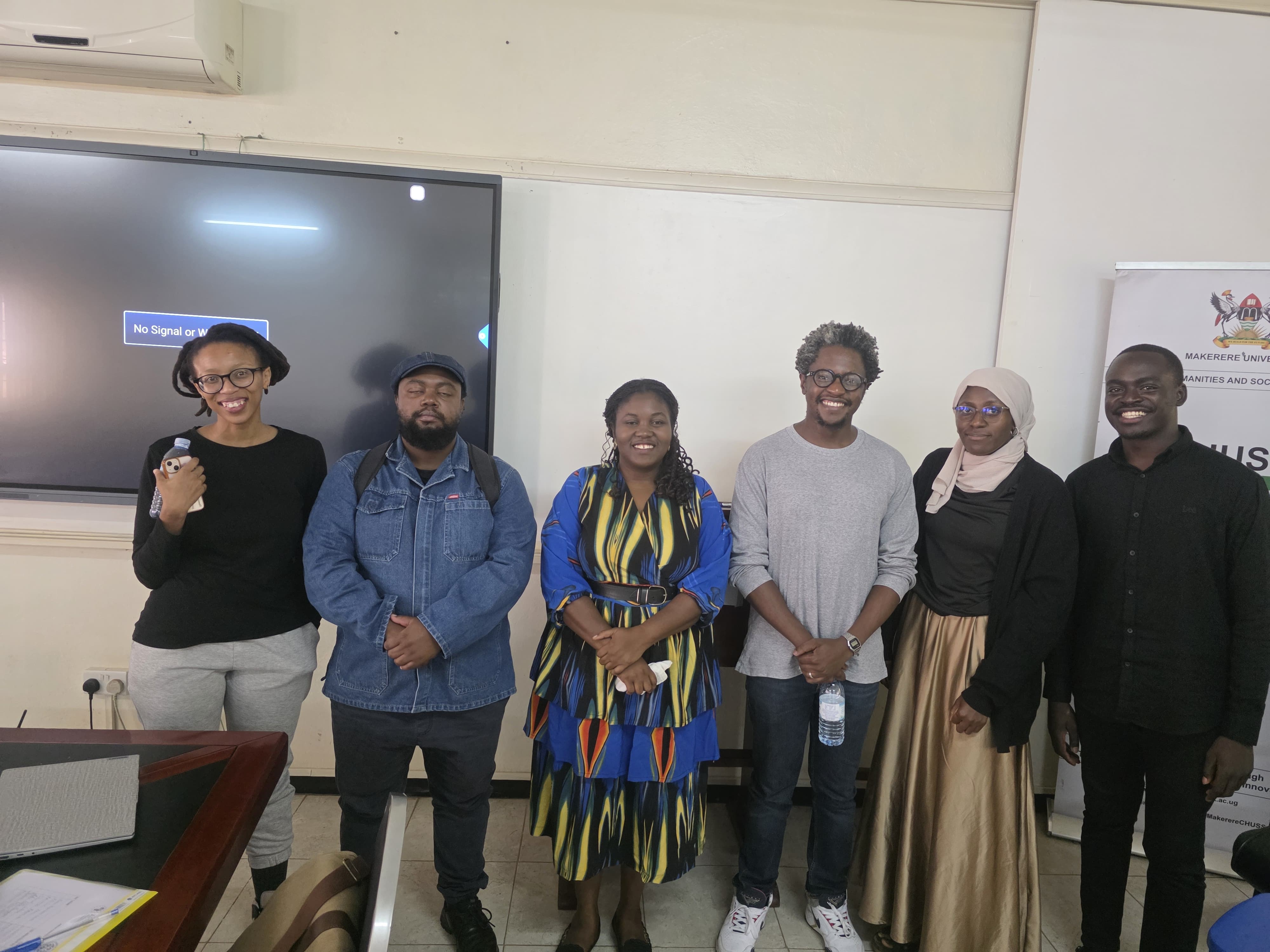
Dr. Kehinde Kemi Rebecca of Anchor University, Lagos, presenting her seminar, “The Layers of Rebellion: Dismantling Power Structures in African Fiction,” during the ARUA CoE Identities Seminar Series held on 19 February 2026. The session was discussed by Dr. Isaac Tibasiima of the Department of Literature, Makerere University.
About the ARUA CoE Identities Seminar Series
The ARUA CoE Identities Seminar Series brings together scholars, researchers, students, and practitioners to discuss innovative research on identity-related issues in Africa and the Global South. The series promotes interdisciplinary dialogue and knowledge production on themes including belonging, memory, culture, citizenship, decoloniality, and social justice.
In conclusion; As the ARUA CoE for Identities continues to expand its research and engagement activities, the Centre remains committed to fostering critical scholarship, interdisciplinary dialogue, and collaborative knowledge production on issues of identity, belonging, memory, culture, and social transformation across Africa and the Global South.
The Centre extends its sincere appreciation to all presenters, discussants, panelists, chairs, and participants whose contributions enriched the seminar and roundtable series throughout the year so far. Their intellectual engagement and commitment to advancing African-centred scholarship have been instrumental in creating vibrant spaces for reflection, debate, and knowledge exchange.
The Centre expresses its profound gratitude to Professor Barnabas Nawangwe, Vice Chancellor of Makerere University, and the Makerere University leadership for their continued support and commitment to advancing research excellence, international collaboration, and knowledge production. Their support has been invaluable in enabling the Centre to fulfil its mandate as a hub for innovative scholarship and intellectual engagement.
Special appreciation is extended to Professor Sarah Ssali, First Deputy Vice Chancellor (Academic Affairs) at Makerere University and Centre Director, for her visionary leadership, academic guidance, and unwavering commitment to advancing the Centre's research agenda. The Centre also acknowledges the dedication of its administrative and coordination team, led by Mr. Kiggundu Muhammed and Ms. Nakiranda Salama, whose efforts continue to ensure the successful implementation of the Centre's programmes and activities.
The ARUA CoE for Identities further expresses its gratitude to the African Research Universities Alliance (ARUA), the Mastercard Foundation, and the Carnegie Corporation of New York for their generous support in strengthening research capacity, fostering scholarly collaboration, and promoting innovative knowledge production across the African continent.
Through these partnerships and collective efforts, the Centre remains committed to nurturing the next generation of African scholars, strengthening Pan-African research networks, and producing knowledge that informs policy, enriches public discourse, and contributes to social transformation across Africa and beyond.
Join us for the next ARUA CoE Identities Seminar on 12 June 2026 at the CHUSS Smart Room, Makerere University. The seminar will explore the theme “A Feminist Epistemology of Ignorance: Amadikazi and the Colonial Foreclosure of Radical Black Women Subjectivity.”
Participants are welcome to attend either physically or virtually via Zoom: https://mak-ac-ug.zoom.us/launch/jc/88667705733
Meeting ID: 886 6770 5733
Passcode: 085146
By; Muhammed Kiggundu